
Medical Minute: What causes dementia?
September 8 2024 | Last Updated: Jan 18 2025
This content is provided for general education and information only. It does not provide individualized medical advice, diagnosis, or treatment, and does not establish a doctor–patient relationship. Always seek the advice of your own physician or qualified healthcare provider regarding personal medical decisions.
Table of Contents
Almost 50% of dementia is preventable according to the latest research published in the Lancet.
To understand how this is possible, it helps to know what researchers and doctors believe causes dementia in the first place.
There are two ways of looking at this question:
What is happening in your brain?
What is happening in your life?
The science reviewed in this article underpins what we do at Aldora and our belief in the immense power of prevention.
What’s going on in the brain?
Dementia occurs when abnormal proteins build up in the brain.
The type of proteins involved vary depending on the type of dementia, which is one reason finding a cure has been so challenging. For instance, Alzheimer’s Disease is linked to beta-amyloid plaques and tau tangles, while Lewy Body Dementia involves a protein called alpha-synuclein (read more about the different types of dementia here).
These proteins disrupt communication between brain cells, leading to symptoms such as memory loss, difficulty finding words, personality changes, or poor decision-making.
Remember: dementia is the “umbrella” term, just like how “tree” is a general term. There are different types of dementia - like Alzheimer’s, Lewy Body, Vascular, etc - just like there are different types of trees.
Over time, proteins damage brain cells and eventually cause them to shrink, a process known as “atrophy.”
We know this sounds scary, but keep reading, as there’s good news in the next section!
The whole process happens very slowly, with proteins building up 10 to 30 years before symptoms appear.
Even once symptoms appear, the spread of proteins still takes another 8-12 years to disrupt the whole brain, in the case of Alzheimer’s disease.

On top of this, symptoms can be made worse if someone also has brain cell damage from reduced blood flow from clogged arteries or strokes, known as “vascular dementia”.
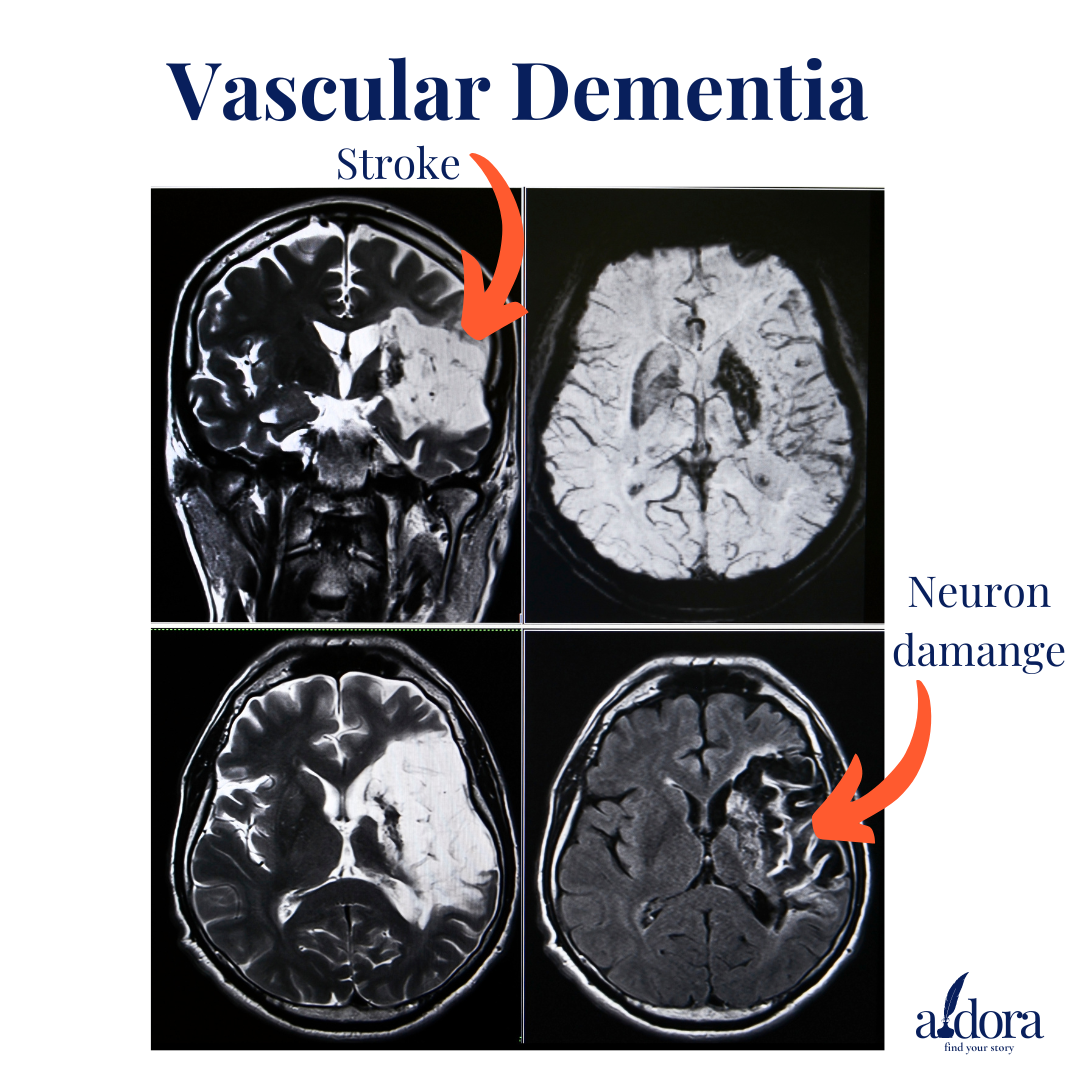
Lack of blood flow can also cause damage to brain cells. When this happens with Alzheimer’s disease, it’s known as “mixed dementia”.
Together, these abnormal proteins and vascular damage are the main underlying causes of dementia at a microscopic level in the brain.
The goal is to prevent this damage. Right now, the main way to do this is through optimizing lifestyle factors like blood pressure, cholesterol, blood sugar, smoking, head injuries, etc.
Soon, we may also have medications that can remove these proteins from the brain. These medications are not yet widely available in Canada at the time of publication.
However, lifestyle factors aren’t just about preventing damage. They also have powerful ways of building brain strength, which brings us to the next way of understanding dementia - what happens in your life.
What’s going on in your life?
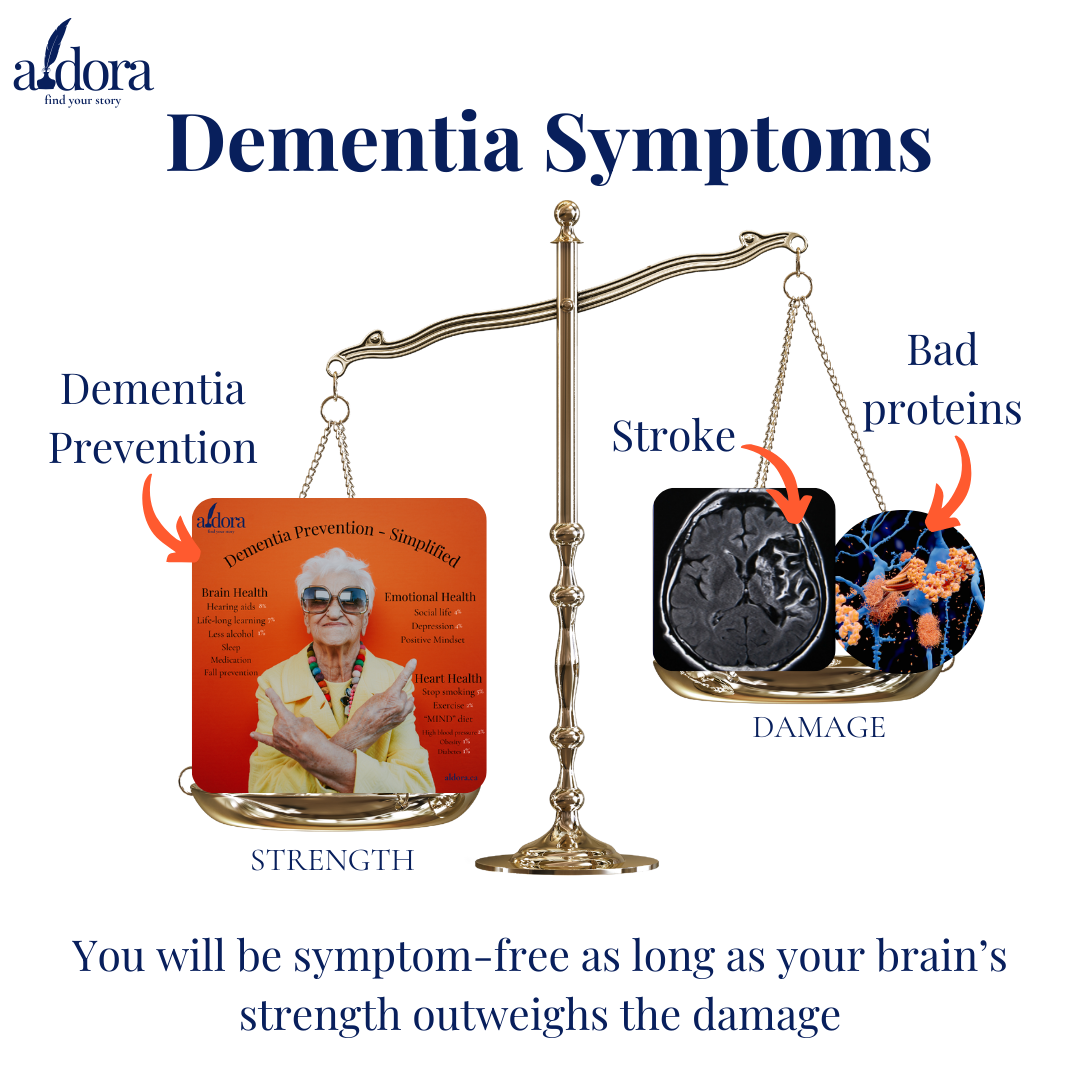
It doesn’t always matter what’s going on in the brain. Some people with dementia-proteins or stroke damage will never show symptoms of dementia if they have enough cognitive reserve.
Cognitive reserve is the balance in your life between how much you have built up your brain’s strength and whether this outweighs damage over a lifetime.
When you have high cognitive reserve, your brain cells are able to communicate despite the damage that surrounds them, or in other words, you resist the disease.
The most famous study describing this phenomenon is the Nun Study.
Researchers found that patients in their 100th decade of life could have large amounts of Alzheimer’s disease pathology in their brain, and yet not have any symptoms of memory loss.
On the flip side, there were also participants who had only small amounts of dementia proteins in the brain but developed significant symptoms.
The difference between these two groups of people was in part due how much they had built up their brain’s strength through daily lifestyle habits - like lifelong learning - to compensate for the communication disruption from dementia-proteins.
This. Is. Huge.
What happens in the brain does not guarantee that you will go on to have dementia symptoms.
The microscopic changes are important for researchers and the pharmaceutical industry looking for an ultimate cure to the disease, but for most of us, what matters most is whether we have symptoms of the disease.
Ultimately, the goal with lifestyle habits is to both prevent damage AND build brain strength.
This brings us to the next obvious question - what exactly are these lifestyle habits that are so powerful?
Aldora’s 18 for Dementia Prevention
Aldora’s 18, covered in this article, can help you avoid dementia symptoms by both building up the strength of your brain and reducing things that cause damage.
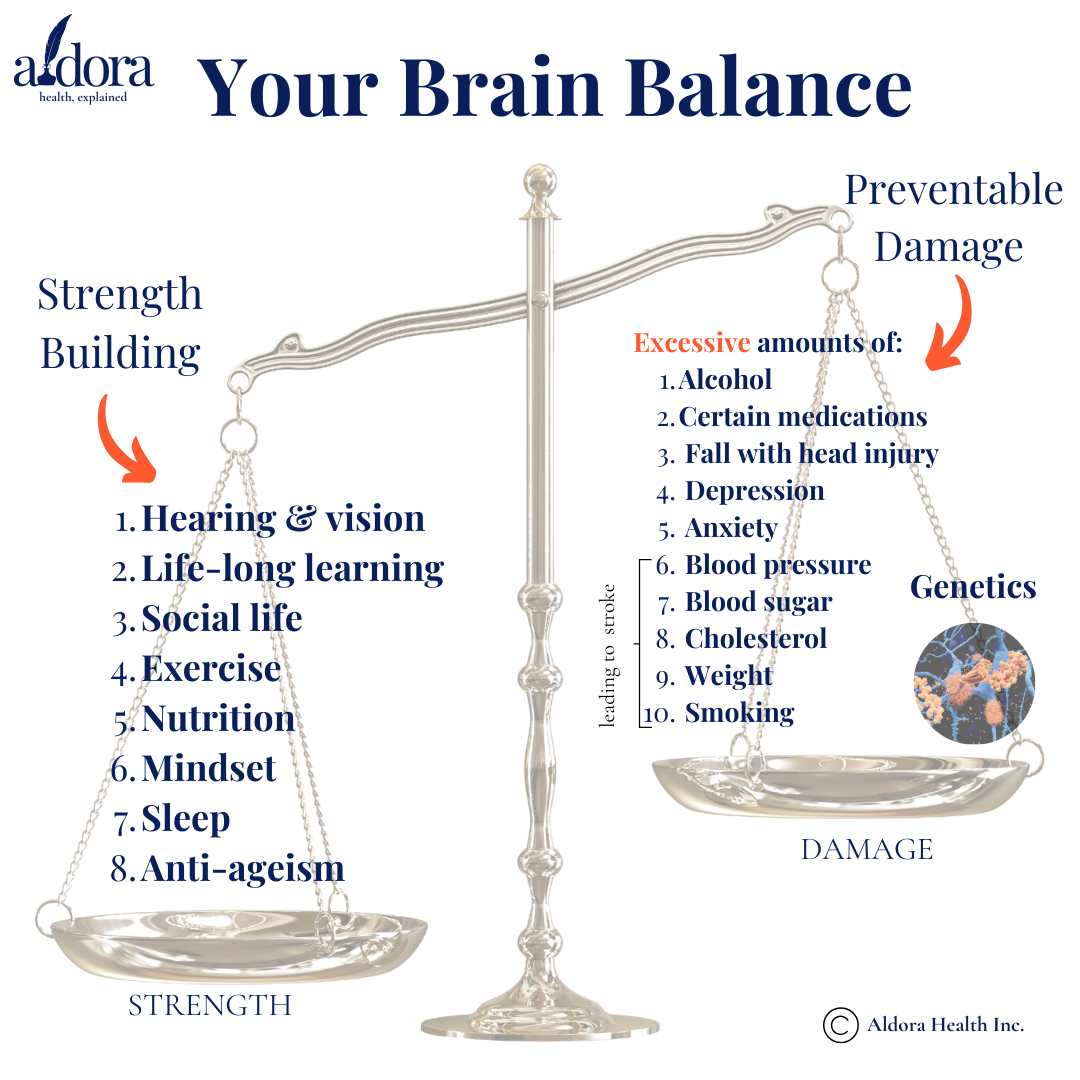
Stroke-damage is primarily caused by heart-health risk factors (like smoking, cholesterol, and high blood pressure, blood sugar, or weight), which were discussed here.
Protein-damage is more common in those with a genetic link (eg. ApoE ε4 allele), making it even more important that those with the gene or strong family history build strength and reduce other forms of damage.
Timing Matters
The best time to get serious about brain health is 10 to 30 years before symptoms appear.
As we discussed in the medical minute on neuroplasticity, you can change and heal your brain.
However, the best time to do it is when the damage is just starting - 10 to 30 years before you develop clinical symptoms.
Remember, dementia is a process of accumulated daily habits (otherwise called risk factors) over a lifetime - it’s not happening tomorrow, but it could happen eventually.
Once the damage has caused cell-death and atrophy, it becomes harder and harder to build strength that is strong enough to overcome those changes.
This means it’s best to take action on your brain health in your 40’s to 70’s - which is also when researchers have found lifestyle has the biggest impact - it all adds up!
However, it is never to late to start. The brain can be improved in many people who already have mild memory problems or early dementia.
It is only in moderate stages of dementia and beyond that the focus shifts to managing symptoms, as current medications and lifestyle changes are not enough to stop the spread of damage at this stage.
In Closing…
In the brain, dementia is caused by the accumulation of protein and stroke damage that interferes with brain cell communication.
In your life, you may never actually experience symptoms of dementia if you are able to build enough cognitive reserve to overcome this damage.
Your daily lifestyle habits - summarized as The Aldora 18 - can reduce your risk for dementia by reducing damage and building brain strength.
Related Posts



Key references:
Dementia prevention, intervention, and care: 2024 report of the Lancet standing commission (Livingston et al, Lancet, 2024, found here).
Combining modifiable risk factors and risk of dementia: a systematic review and meta-analysis. (Peters et al, BMJ Open, 2019, found here).
Healthy aging and dementia: findings from the Nun Study. (Snowden D, Annals of Internal Medicine, 2003, found here).
Why trust Aldora?
Aldora Health was founded by a Canadian physician specializing in cognitive health and dementia prevention. Content is informed by clinical experience, large population studies, and current prevention research, and is designed to support informed, thoughtful health decisions over time.
Disclaimer: The content on Aldora Health is for educational and informational purposes only and is not intended to substitute for professional medical advice, diagnosis, or treatment. Always seek the advice of your physician or other qualified health provider with any questions you may have regarding a medical condition. For more read our Terms of Use.